If you are trying to remember twenty separate moves, the next one can start to matter more than the person under your hands. Designing a competition routine around a handful of phases gives you a dependable route through the time. You can make an adjustment for a real recipient without losing track of where you are.
Begin with a kind of treatment you know well and a category you have checked. You can then decide what to demonstrate and where to leave room for individual needs. The examples here are ways to plan a rehearsal. Use the competition’s rules and your usual professional judgement when you give the treatment.
Give the treatment one clear intention
Write a sentence you could say to a colleague, such as “I will show a calm, whole-session approach using techniques within this category, adapting pressure and position to the person receiving it.” If you know what the session is supposed to do in the context of the competition, it is easier to decide whether a change belongs.
Keep the aim modest enough to observe. “Show deliberate transitions and check the recipient’s preferences when changing position” gives you useful information at the end. A long list of promised benefits can make you feel obliged to deliver something a timed demonstration cannot establish. Think about what your treatment shows in the room rather than what you would like the event to prove.
Find the rules that shape your timing
Note the complete time, what must happen inside it and what is done before the start. The IMA’s published rules describe round timing that includes an examination window. The Canadian championship’s category information describes a 30-minute performance. A duration quoted on its own does not tell you how an organiser handles setup, finishing or judging. Confirm those boundary points with the event team.
If your chosen category has required elements or tool restrictions, put them on the plan. Make it clear where you intend to meet each requirement. If bringing a tool would add setup, handling and cleaning time for little purpose, you can keep your work simple. The category guide can help you check that your dominant approach is clear, and the equipment guide covers what to verify before packing.
Sketch phases rather than memorising strokes
Here is one rehearsal outline for a hypothetical 30-minute station where all of these phases are counted inside the clock. Check the real rules before borrowing the timing.
- Minutes 0–4: introduce yourself, check what is appropriate today and agree a way to pause or adjust.
- Minutes 4–8: settle the recipient in the position you have agreed and establish the pacing of the work.
- Minutes 8–20: show the core of your chosen approach in a form you know well.
- Minutes 20–25: make any planned changes of position or direction and develop the second part of the work.
- Minutes 25–30: bring the session to a close, check the recipient and finish in the way the organiser requires.
Those blocks are deliberately broad. When you practise them, note whether the tenth minute feels like a natural point or arrives too soon. If one transition takes longer than expected, adapt the schedule and test it again. A five-minute ending may be generous in one format and too short in another. Leave a small margin, especially if the finish cue is different from the timer you practise with at home.
Build in choices rather than defaults about the recipient
For each main phase, record one alternative that still fits your intention. If a position is uncomfortable, what can you change within your competence? If the person does not want an element, what space does that leave in your treatment? A reliable alternative might simply be taking more time with a familiar part of the routine. Confirm that they are happy with the change and follow the event process if you need to stop. See the CNHC standards on consent and client involvement.
Think about pace as well as content. A quiet pause while repositioning can be attentive and appropriate. Use the time to explain what is happening and make sure the recipient is settled. If you catch yourself rushing this part just to reach an optional sequence, turn that observation into your next practice goal.
Rehearse the joins, then try the whole treatment
Start with two transitions: getting into your main phase and moving into the close. Ask someone to read out a start or time cue and give you no further prompts. Ask the recipient how the transitions felt. Ask the observer whether they could see why your position or pace was changing. Their answers are separate and both can help.
Once the joins make sense, do a full run with the linen, tools and supplies you will use. Notice anything you keep moving, hunting for or apologising for. Rehearse any adjustment you would make in the moment, including how you would tell the recipient. The National Massage Championship criteria illustrate why communication, draping and client care are part of what a judge can observe throughout.
Try one final run with a modest change to the available time. Identify what you can shorten while preserving the person’s comfort and your closing sequence. You could make the core simpler and omit an optional transition. Note the decision before the run rather than working it out with one minute left.
Take a short cue card into your final rehearsal
Write the treatment intention, the names of the phases, the last cue for finishing, and the simplest fallback in one line each. Use it before you begin if allowed. Once you are working, let it sit in the background. You want enough familiarity to notice how the recipient is responding and enough flexibility to change what you planned.
For specific rehearsal exercises, see Flow, Rhythm and Body Mechanics. If you have the basics in hand and want to make the treatment feel more like your own work, take one well-understood idea into the guide to creativity.
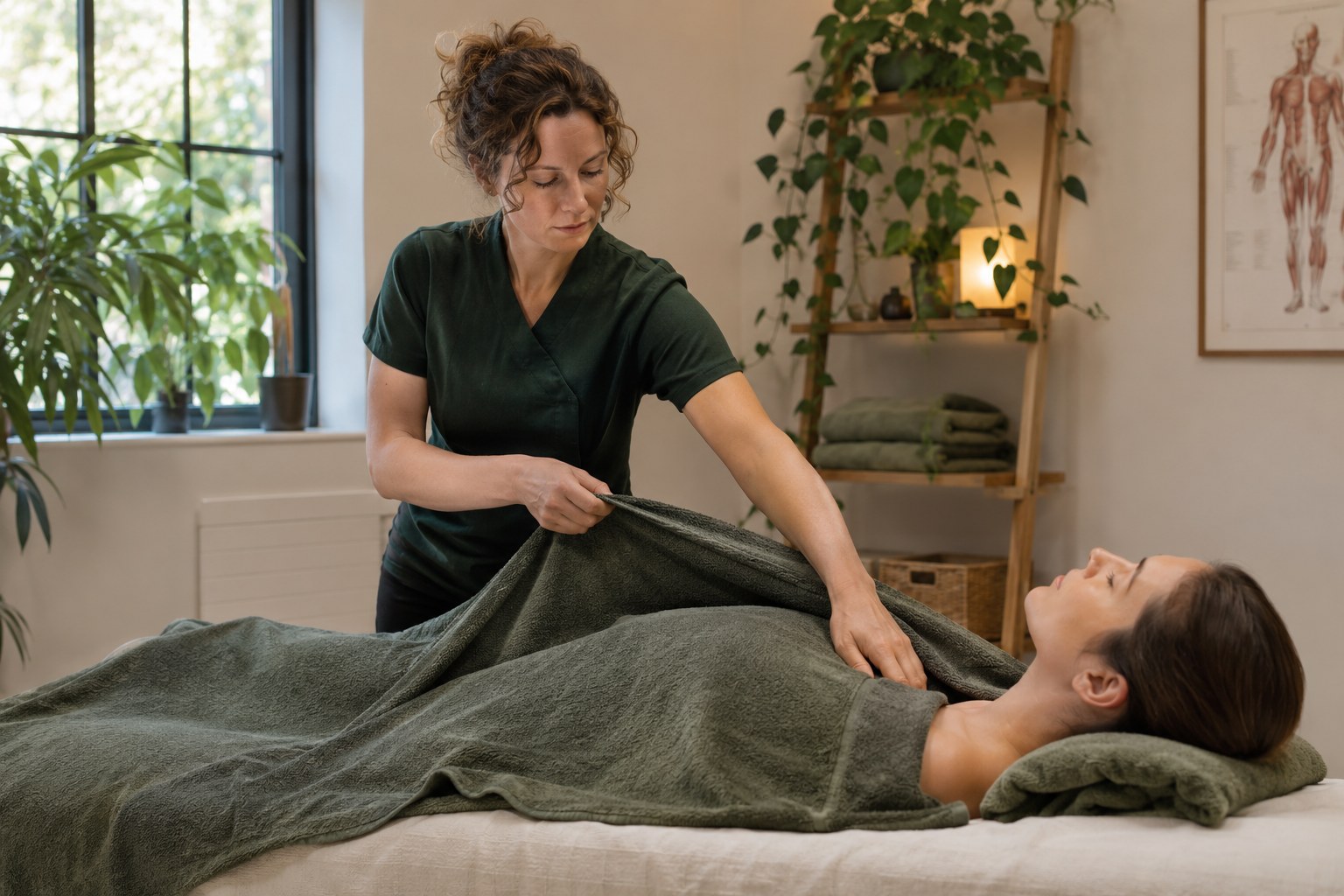
AI-generated editorial illustration for Massage World.