A category name is a headline. The paragraph underneath tells you what you can actually do. That distinction matters if your everyday massage combines approaches. A treatment you would naturally call classical may include an articulation, a tool or a sequence the organiser sees as belonging somewhere else. Start with the work you want to show, then check it against the category description.
You can find event profiles in the Championship Directory. Treat those as introductions to the competition. For your entry, use the official category wording, the general rules and any later competitor briefing for that exact edition.
What categories usually describe
Some categories are named for a tradition or approach, such as Swedish or Thai massage. Others describe the setting or part of the body, such as chair or facial massage. A freestyle designation may give you room to combine influences, while still requiring a clearly identifiable approach or defining which equipment and techniques are appropriate.
These families are a starting point for reading an event’s rules. They are useful if you can see the work you do in more than one of them. A model receiving a clothed and supported treatment, for instance, does not tell you whether the organiser would call the routine chair, Thai, sports or freestyle. The planned sequence, setting, dominant principles and permitted techniques all help answer that.
Classical, Swedish and related names
The UK Massage Championship’s 2026 category listing described Classical Massage as including Swedish, holistic and other classical Western relaxing approaches. Its listed category excluded tools, deep-tissue techniques and strong articulations. The National Massage Championship’s 2026 FAQ, by contrast, listed a combined Swedish/Deep Tissue category. Those names look similar enough to confuse, especially if you simply search for “UK Swedish massage competition”. Check the full event name before taking either one as your reference.
The Canadian 2027 descriptions offer another example. Their Swedish category names a set of core techniques and sets a limit for optional stretching and mobilisation. If a question arises over what occupies that proportion or how the limit is applied, send the organiser the relevant part of your planned sequence. It is easier to have a precise conversation about a short section than ask whether “some stretches” are allowed.
Wellness, sports and clinical
Wellness may make sense for a treatment built around continuity and a particular client experience. Find out whether an organiser allows, requires or restricts particular products or equipment. A sports category may suit a targeted approach, yet the event might expect you to demonstrate choices, communication and adaptations in a way that a general description on the entry page barely touches on. Clinical names also vary. Check how the competition defines assessment, evidence of training and summarising what you did.
An entry decision does not replace your professional obligations. Pick techniques and tools you are trained and insured to use, and think about the recipient and conditions in the room. Your category may allow a technique you have never used in practice. There is no need to add it. The equipment guide can help you check both what the organiser permits and what you would need to bring.
Tradition-led and freestyle categories
The IMA’s Copenhagen rules list Thai massage separately from Eastern-inspired freestyle and list a Western-inspired freestyle category. That distinction can be helpful if you practise within a particular tradition. Ask which principles define your treatment, what you would explain about its origins, and which parts are your own adaptations. If a label invites a blend, check how to keep that blend coherent and whether the rules set limits around props, techniques or presentation.
Suppose your strongest material is a familiar clothed session with a short addition borrowed from another approach. You could keep it in a tradition-led entry if the organiser permits that addition and the main approach is clear. You could develop and test a fuller blend if a suitable freestyle category is available. Show your two sketches to a colleague familiar with both styles. Ask what approach they recognise and what feels less well integrated.
Audit a routine before you select a category
Write the planned treatment as ten or so broad actions. Include preparation, initial contact, positioning and finishing, rather than giving each technique its own detailed instruction. For each action, jot down the purpose, the category wording that applies and what you would do if the recipient needed something different.
Then work through four questions.
- What is the main approach a judge could recognise without hearing your explanation?
- Are the treatment position, equipment, mediums and level of contact within the category’s written rules?
- Is there an explicit restriction, a required element or a percentage limit that changes the sequence?
- Will you still have an entry that makes sense after a permitted adaptation or equipment substitution?
If you cannot tell what a definition means in practice, ask the event team in writing. Include the edition, the category name and one concrete question. For example, ask whether an ordinary positioning aid is treated as equipment that must be declared, or whether initial communication counts within the timed round. Compare the answer with the general rules and keep it where you can find it.
Check what the category can lead to
A category award is separate from entering an overall final. The IMA rules, for example, say remote entrants can win their category but are ineligible for the overall final, and describe multi-hands as outside the main overall competition. These are Copenhagen rules, and the organiser’s page includes some wording from earlier editions. Ask if your division or format affects finalist eligibility and use an edition-specific confirmation before entering.
If an event allows multiple entries, take your preparation time into account. Two categories can mean two sets of timing, equipment and paperwork even if the routines share some elements. The place to begin is with the category you can explain, demonstrate and adapt clearly. Take your choice into the routine design guide, or revisit how to compare events if none of the definitions fits the work you want to show.
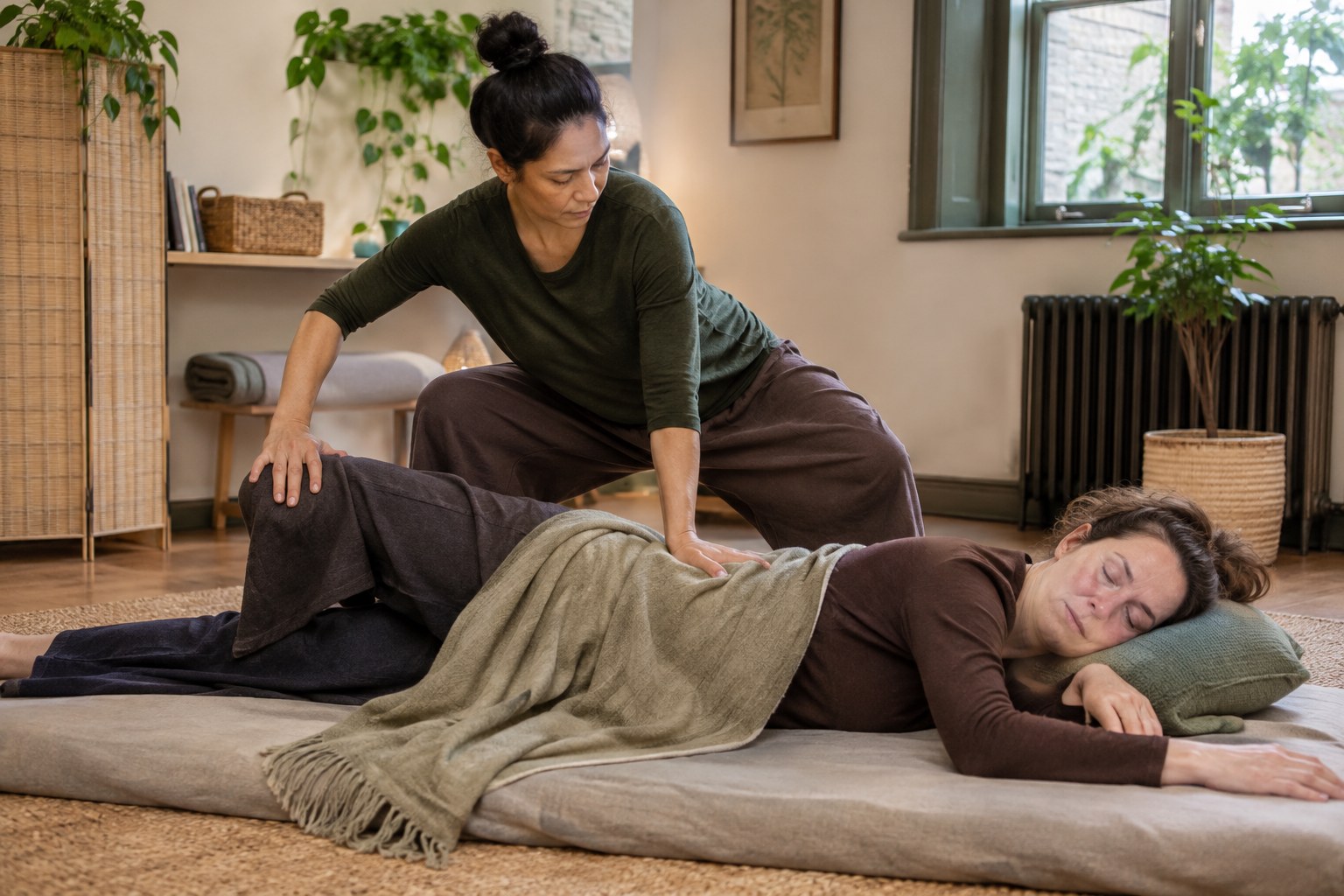
AI-generated editorial illustration for Massage World.