The room might be a little louder than you expected. You can see colleagues preparing next to you and the clock feels more public than it does in your practice room. It is easy to take those sensations as evidence that your preparation has disappeared. Before the first round, give yourself a shorter question to answer: what is the next useful thing I can do?
Confidence often becomes more tangible when you can name the start of your routine, the things you can control and the way you will respond if you lose your place. The exercises here are practical rehearsal suggestions. Pick one or two you would be willing to try on an ordinary day.
Be specific about what worries you
Write down the moment you keep imagining. “I will be nervous” is hard to rehearse. “I might rush through my opening when someone walks up to the couch” points to an exercise. Others may worry about forgetting the finish cue, navigating the venue, speaking to an unknown recipient or being asked a question they cannot answer. Choose the most likely scenario and plan a practical response.
Split what you know from what you are predicting. Confirm details you can check, such as where to arrive or how the model arrangement works. If you have a question about access, cue audibility or communication, raise it in advance. You are allowed to solve practical problems. The competition-day walkthrough can help you identify which information would make the day feel more familiar.
Practise being observed in smaller steps
A full simulation may feel too much for a first run. Rehearse a short section alone with your model, then invite one trusted colleague to watch the same section. Give the observer a simple job, such as checking whether your introduction is clear or noting when you change pace. Ask them to wait until the end to comment unless you or the model ask them to stop.
Repeat the section with one realistic difference, such as a louder room, an observer moving to the side or the clock facing away. Choose a change relevant to the rules, and check that the model is comfortable with it. You can build towards a longer run when the first few minutes feel predictable. The IMA’s preparation lesson gives a further organiser-hosted starting point for planning practice.
Ask your observer for a description before a judgement. “You moved the stool twice before beginning” is easier to act on than “You seemed nervous.” Ask the model which parts felt unhurried. You may discover that a moment you remember as awkward seemed clear to them. If the communication was uncertain, rehearse that part with one simple change.
Put a short reset into your routine
Choose a cue you can use quietly and safely when distracted. A cue could be feeling your feet on the floor, looking at the next piece of equipment you need or silently naming your next action. At an appropriate pause, let your breathing return to a comfortable pace. The point is to give your attention somewhere to go. Do not interrupt communication or ignore a request from the recipient to complete a ritual.
Practise returning to the routine after a neutral interruption. In a rehearsal, ask your observer to make a small sound at an agreed point or use a time cue earlier than you expect. Decide which part of your plan you can shorten if needed. You can find ways to make this workable in the routine design guide.
Make decisions about the things you can control
Go into the day with three commitments you can carry out regardless of judging. For example, decide to check the recipient’s preferences clearly, arrange your station within the allotted time and leave enough time for a calm finish. Those commitments give you useful standards to look back on later. A ranking gives information about the event, while these observations tell you which parts of your performance you can develop.
Plan what you will do in waiting time. Wear something suitable for the venue outside the allotted round. Keep the briefing and your meeting point handy. You may find a quiet place easier than standing close to the floor, or prefer to sit with a colleague. Find out what is allowed and make a choice you can change. If a schedule is disrupted, ask for the next instruction before deciding you have missed something.
The organiser-published competitor and judge interviews can be reassuring for a practical reason: they give you several accounts of what people paid attention to. Watch them as individual perspectives. Keep an idea only if it helps you prepare for your event and the way you work. Respect the organiser’s boundaries and channels for contacting judges, such as those laid out in the American Massage Championships code of conduct.
If a round does not feel smooth
An awkward transition, a quick question from the floor team or a forgotten optional sequence might feel much larger from the inside. Pause where it is appropriate. Return to the agreed treatment or check what the recipient needs. If they want a change, respond to that first and follow the event’s process. A concise explanation can help both of you find the next step.
Afterwards, note what you think happened and what you can confirm. Give yourself a little distance before reworking the whole routine. If you want an outside view, ask for one concrete observation through an appropriate channel. The guide to reflecting after a competition can help you turn the experience into a more balanced set of notes.
If you are practising this week, choose one opening cue and one way to finish. Run the beginning and ending once with a colleague present. Your goal is to recognise the moment you can do something useful, even on a day when you still feel nervous.
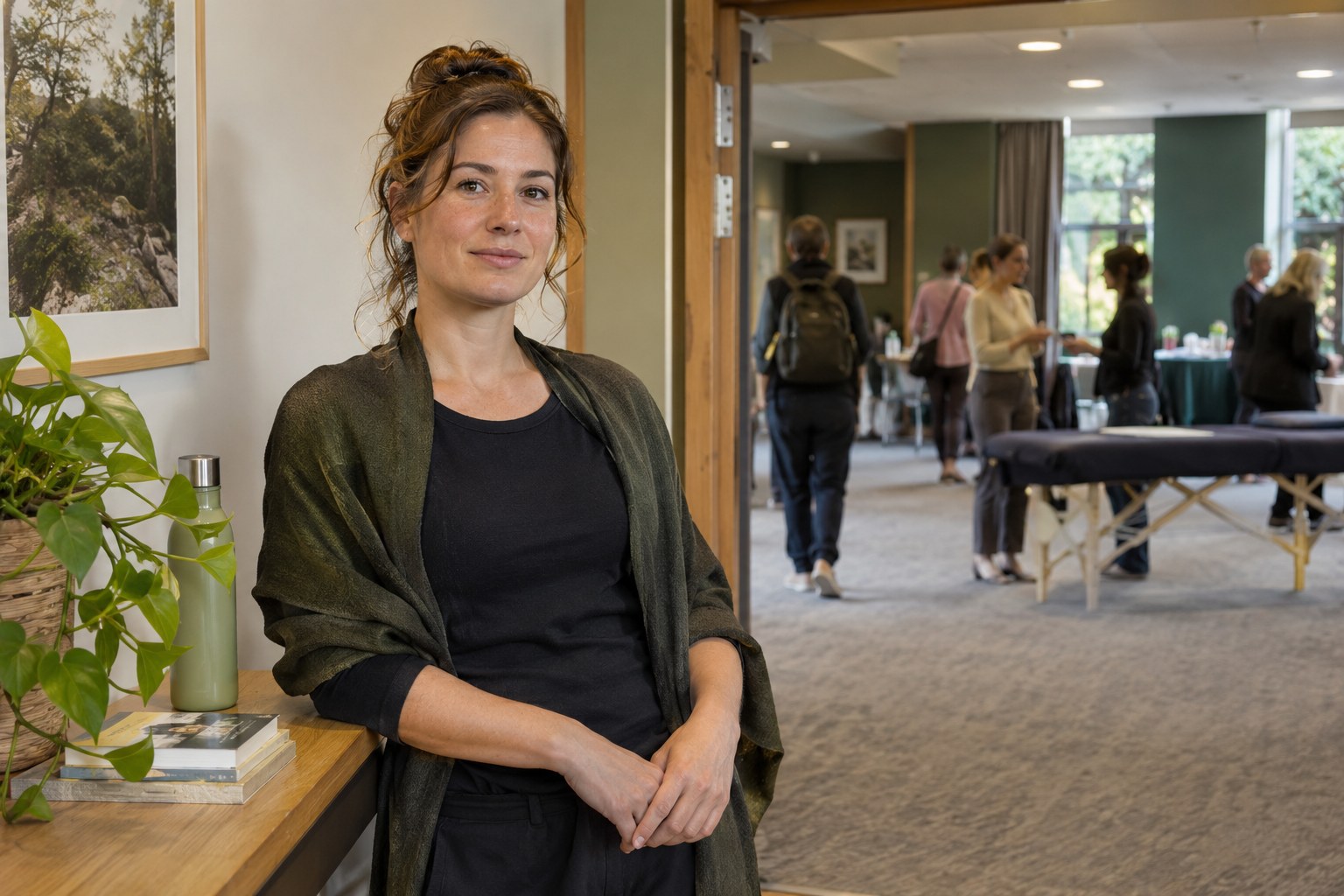
AI-generated editorial illustration for Massage World.