On competition day, you may have an hour of new information to take in before you put a hand on anyone. A plan for arrival, waiting and leaving can make the treatment itself feel much more familiar. Take the organiser’s latest briefing with you, and think of the sequence below as a way to picture the day before you get there.
The time you see on a public programme could be the opening of the venue, your check-in time or the start of a round. Confirm which one applies to you. If you are entering more than one category or might be needed as a recipient, make a separate note of where you need to be between rounds.
Arrival and check-in
Find the competition desk named in the briefing. Keep your booking reference, identification and any documents the organiser asks to see within reach. If someone is modelling for you, confirm whether they need to sign in separately, collect a pass or report to a changing area. If you arrived with a colleague, agree where to meet again before you split up to go through check-in.
Find out how your station and round are identified. Your equipment may need to be dropped off or checked before you move to the competition area. Ask where to wait and whether you need to come back to the same desk for updates. An arrival delay is easier to handle when you know who can give you the latest instructions.
The briefing and your station
Listen for the time allowed to set up, how the start and finish are signalled and how to get help during the session. Ask how to address a practical issue such as noisy time cues, difficulty seeing a clock or unfamiliar equipment. If you are expected to receive massage, pay attention to how the organiser coordinates the two roles.
The NewMa Euro 2027 FAQ describes competitors treating one another and being models. By contrast, the National Massage Championship’s 2026 FAQ describes scheduled rounds by category and notes that chair massage had a shorter round than most others. Use examples like these to understand why an old video or someone else’s experience may not tell you how your day will work.
Look at your available space once you are allowed to. Plan a route for yourself and the model, put the first few items within reach and check safe use of any supplied furniture. If your routine depends on something you cannot find, ask a floor marshal before the start. Use the list in Preparing Your Equipment and Treatment Space to think through these details before the trip.
While the round is running
Start when instructed and follow the organiser’s process for any initial check or examination. Keep focus on the person and the available time. Judges may observe from different positions or at different points. You may not know which part each judge saw. Use ordinary communication and explain an adjustment in a way the recipient understands. If you need to pause or stop, take care of the person and follow the floor procedure.
The IMA rules describe 65-minute rounds including examination. The 2027 Copenhagen programme shows one way those rounds fit into a larger event, with online preliminary rounds in one part of the programme, in-person rounds, education and awards. Treat the published timetable as something to recheck near travel and again at arrival. Verify your own call time even if you have already seen a schedule online.
The World Championship in Massage 2027 event page brings the dates, location and organiser links together if Copenhagen is on your shortlist. Use the organiser’s instructions for any late changes to your reporting time, assigned station or round.
Aim to reach the close before the final cue rather than plan on squeezing something in after it. Let the recipient know what happens next and whether you are expected to stay at the station. If a round felt rushed, make a brief private note once you have left the floor. Thinking about one concrete moment gives you something more usable than trying to give yourself an overall mark while you are still in the room.
Between rounds and on the results schedule
Finish any clean-up or equipment handover promptly. Confirm where to put used linen or whether you are allowed to leave kit for another round. If the schedule changes or you might be called again, ask how the organiser will communicate that. Know where you can hear or see announcements while you have a break.
Different competitions spread the event out in different ways. The Canadian and International championship’s 2027 information lists the first rounds and selection of finalists on Saturday, with the final and awards on Sunday. If your own event separates these stages, check whether you have to attend an announcement, how finalists are contacted and what time you need to return. Where possible, make travel arrangements that can accommodate the later stage if you qualify.
Spend some of the waiting time in a way that suits you. You might look at part of the wider programme or choose somewhere quieter. If you want to watch other rounds, confirm where spectators can stand. Follow the organiser’s recording rules and leave room for people working at their stations.
Before you leave
Ask how official results and any feedback will be shared. Check whether any property needs to be collected before other rooms close. If you arranged to leave with a recipient or colleague, return to the agreed meeting point rather than relying on someone finding you in the crowd. Give yourself time to get home with everything you carried in.
Your preparation checklist should contain your arrival window, one person to ask for help and your next check-in after the round. If you are worried about the waiting or the first cue, managing competition nerves gives you ways to practise that part. After the day, keep one practical observation from your setup or timing. It will make your next preparation more informed.
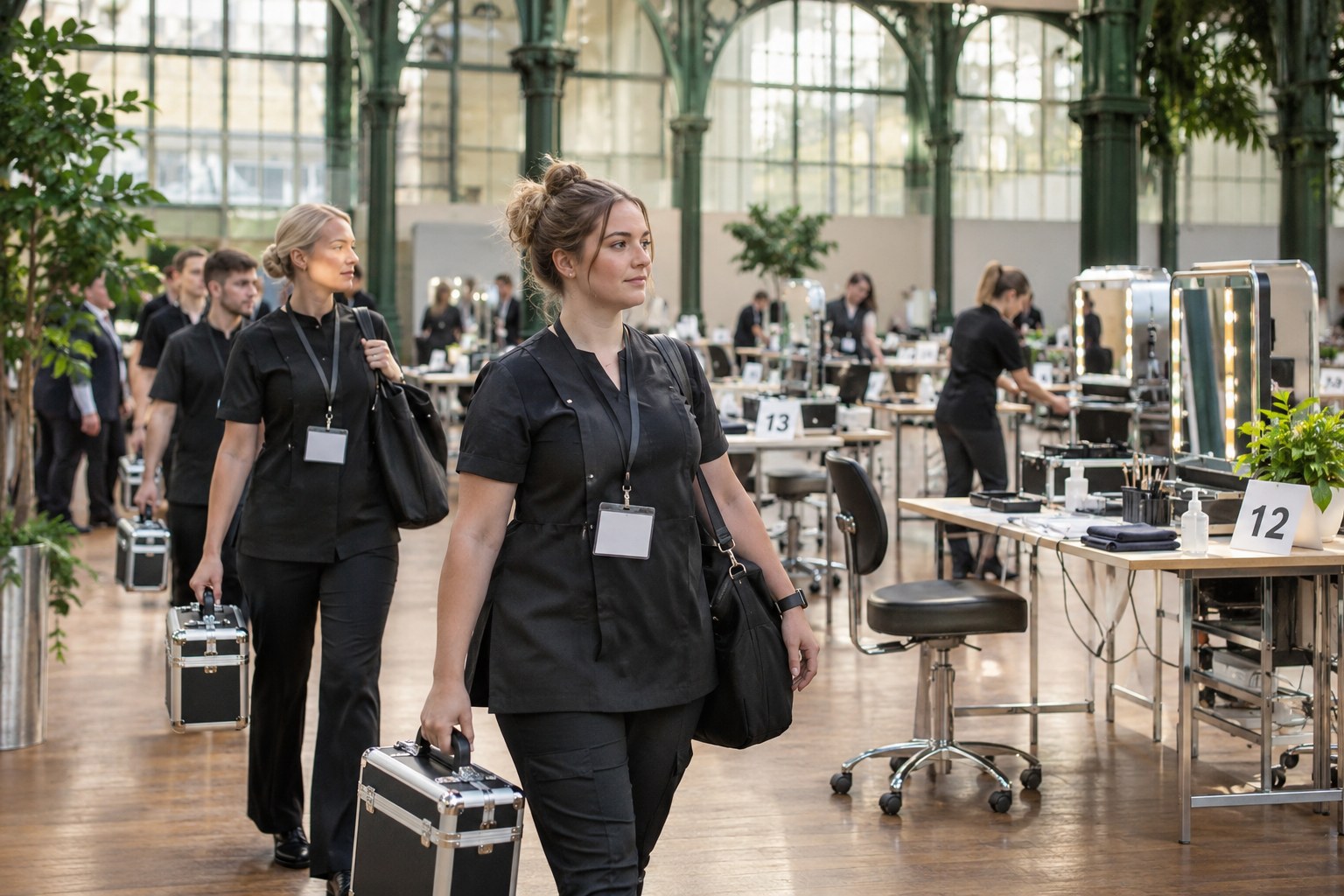
AI-generated editorial illustration for Massage World.