A championship can give you plenty to bring back to practice: a clearer idea of how you explain your work, a colleague whose training interests you or a question you want to explore. The experience does not have to become a marketing project. A small number of deliberate follow-ups often makes more sense than trying to do everything while the event is fresh.
Think about your first month afterwards. You can reflect on a treatment, follow up with people you actually spoke to and share an accurate account of what happened. Pick steps that suit your work and the time you have.
Record what you have learnt while you can still describe it
Write down the edition, category, format and your own purpose for taking part. Add one observation you made, one thing someone else noticed and one question you want to take into your practice. Keep these distinct. “I had to reach across the couch for a support” is an observation. “My setup looked uncertain” might be someone’s impression. “Could I organise the station differently?” is a useful next action.
If you attended a workshop, note what you personally practised, what you only observed and what you would need further training to use. Keep any confirmation of attendance and check your association, register or employer’s CPD rules before recording hours or describing an event as accredited. The CNHC CPD standards offer a framework for UK registrants that includes reflecting on learning and deciding how it will inform your work.
Make a small plan to apply something appropriate. If a competition rehearsal helped you give clearer instructions, notice whether the same phrasing works in a quieter appointment and gives a client time to reply. If it improved how you set up your station, assess whether you can use the change at work. Our advanced skills and CPD guide can help you think about training if the next step involves a specialist technique.
Follow up with people without making everything a pitch
Think of a conversation you would genuinely like to continue. Send a short message through a channel the other person offered, mention how you met and ask one clear question or suggest a shared exchange. You might want to hear about their approach to rehearsal, explore a workshop together or trade observations about working in a particular modality. Respect their time and their choice about whether to reply.
Ask before sharing anyone’s contact details or adding them to a mailing list. Be considerate about messages to an organiser or judge. If you met them around the competition, follow their policy on assessment queries. A friendly conversation at an event does not necessarily come with permission to discuss judging afterwards.
The NewMa Euro FAQ describes professional connection and learning as aims of the event. You can take part in that community as a competitor, visitor or class participant. The World Tour interviews offer some individual perspectives on what people did next. Use them for ideas you can evaluate in your own circumstances.
Tell the public exactly what happened
Use the official event name, year, category and confirmed outcome. The 2026 National Massage Championship report and NewMa’s results archive illustrate how organisers distinguish types of awards. “Entered the facial category at [event] in [year]” says something clear and verifiable. An award can be equally clear if you specify the category, place or named distinction and the edition. Link to the official record where that is useful, and update your profile if you find an error.
Avoid describing an award as evidence of greater clinical competence, stronger treatment effects or a new qualification. Readers could reasonably take those claims to mean something that a competition result alone does not establish. Keep your qualifications, scope of practice and the competition record distinct in your public profile. Follow your local advertising and professional requirements. The CNHC code and FHT code set out relevant expectations about claims, confidentiality and professional conduct for their own members or registrants.
Check what you are allowed to share
Ask which event images are licensed for your use and whether a credit is required. In a photograph of your work, the person receiving the treatment may be identifiable even if their face is not clear. Check the organiser’s terms and the people’s consent before sharing. Only use another person’s comments publicly if you have appropriate permission and can describe them accurately. Leave detail that belonged to a private rehearsal in your own notes.
Make your practitioner profile useful to clients
From a reader’s point of view, your profile should quickly say what services you offer, what you are trained to do and how they can contact you. Add competition information where it helps them understand your professional interests. A sentence about attending a masterclass, entering a well-defined category or working on professional skills may fit. A competition result can be included with the same care you would give any other factual statement.
If you want a Massage World directory profile, use the existing practitioner registration route. Keep your contact details, location and services current. A directory listing is one way for readers to find your work, and the Championships Hub can help you stay in touch with upcoming events and resources. As with any professional profile, write for someone deciding whether and how to contact you.
Choose one action for the next month
In week one, record what you learnt and check the facts you might share. In week two, follow up with someone you met or choose a suitable learning activity. In the remaining weeks, try one useful change and make an update to your professional profile if it serves your readers.
If you came home without a medal, there is still plenty you can do with what you learnt. Reflecting after a championship can help you choose the experience you want to carry into your next step.
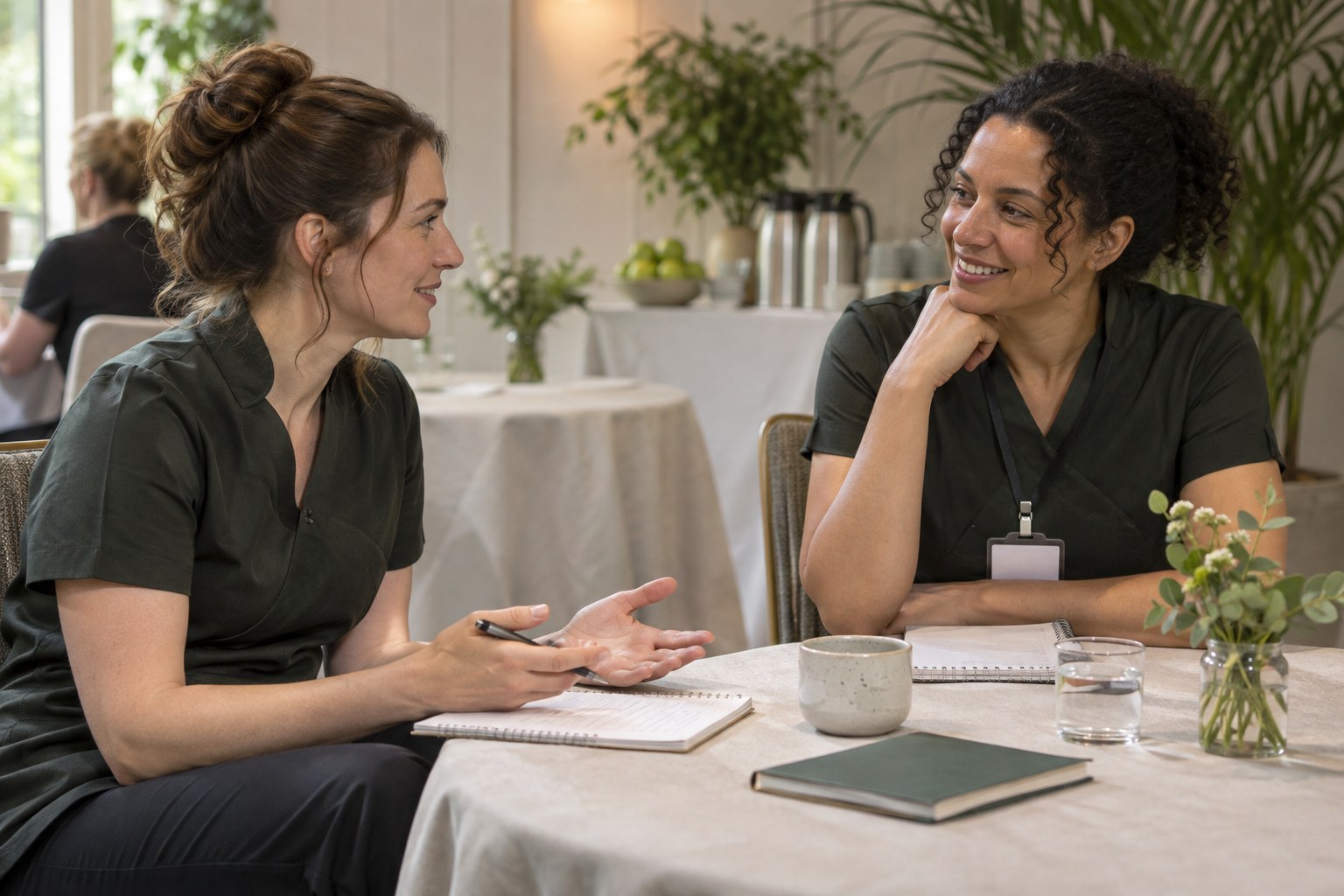
AI-generated editorial illustration for Massage World.