By Colleen O’Flaherty-Hilder
Stress has become part of our everyday vocabulary and, unfortunately, the more familiar we are with it, the more we accept it as part of our lives. Stress affects our mind, body, and behaviour in many ways and often signals what needs to change. When someone is out of their comfort zone on any level, they trigger the release of stress hormones.
Stress results from a brain response that interprets a situation as a threat to survival, and the body produces chemicals that activate the ‘fight or flight’ syndrome. This mechanism evolved in primitive man for short bursts when confronted with a real threat to survival. Today, this mechanism activates in response to any challenging emotional, physical, social, economic, or other factor that requires a response. When people experience high levels of stress chemicals for prolonged periods, it can eventually impair physical and emotional health. Equally, repeated episodes of stress train the brain to prefer stress, and that emotional set point is what leads to 80% of health problems.
Over the past twenty years, research has shown that stress increases neuroendocrine hormones, and overproduction of these “stress” hormones harms lymphocyte populations, lymphocyte proliferation, and antibody production, weakening the immune system. The effects of producing too many stress hormones are many and varied, and every system of the body can be affected. e.g. high blood pressure, digestive disorders, sleep dysregulation, and panic attacks. The workplace appears to be one of many triggers of stress. The latest estimate from the Labour Force Survey (LFS) shows that the number of days lost due to work-related stress, depression or anxiety in 2013/2014 was a staggering 11.3 million. Work-related stress is defined as a harmful reaction to undue pressures and demands at work. Equally, one man’s stress is another man’s challenge, so stress is a totally subjective and individual response to pressure.
Now more than ever, there is a need to find a natural response to these escalating stress-related health issues. The therapeutic benefits of essential oils (clinical aromatherapy) have been known since ancient times, are taught in French medical schools, are prescribed by European physicians, and have a long legacy of addressing the many and varied effects of stress on the mind and body.
In many countries of the world, essential oils are taken internally as medicine, but in the UK there are two main routes for the absorption of essential oils:
Olfaction via the sense of smell,
The skin via massages, baths and compresses.
Aromatherapy, like stress, has become a commonplace word, and over the last three decades essential oils have been included in everything from air fresheners to washing detergent. When we talk about the therapeutic qualities of essential oils, we mean oils with the correct chemical profile. This means oil production must be specific and scientifically controlled; otherwise, the result will be an oil with a pleasant odour but no measurable therapeutic value. Essential oils have physiological effects on the human body (e.g., bactericidal, antifungal, anti-inflammatory, expectorant) and emotional effects, such as calming, sedating, and uplifting.
Inhaled essential oils (olfaction) activate the release of neurotransmitters such as serotonin, endorphins, and norepinephrine in the hypothalamic-pituitary axis, altering mood, reducing anxiety, and interrupting stress-response signals to the limbic system, the part of the brain involved with emotions, learning, and memory.
You can add essential oils to a vapouriser, hot water for steam inhalation, or a nasal inhaler you can keep in a pocket or handbag.
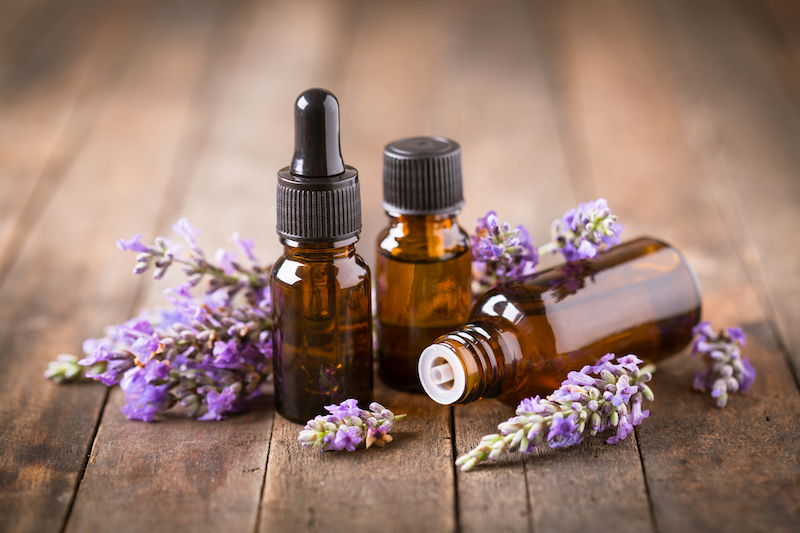
Massage's health benefits for both emotional and physical well-being are well documented, and with aromatherapy massage, the skin absorbs essential oils into the bloodstream. Studies involving lavender oil show that traces of linalool and linalyl acetate (the active principles) in the bloodstream peak after 20 minutes. These traces disappear after 90 minutes, but the psychological benefits remain for much longer. A clinical aromatherapist chooses a selection of two or three oils – blended in a carrier vegetable oil – and the percentage dilution is tailored to the individual. The massage style must be adapted when using essential oils to ensure they absorb effectively without overwhelming the body's elimination pathways. While the oils are absorbed through the skin during massage, remember they are also inhaled and can directly affect the limbic system.
The therapist will also assess the client's symptoms and choose a blend of oils with therapeutic synergy to suit the individual's needs. With stress, a client might present symptoms from several body systems. By blending oils synergistically, the therapist can address the individual's underlying condition (i.e., the stress trigger) as well as the symptoms. For example, if someone has digestive problems directly related to stress, one could use a blend that addresses both conditions. While each oil in the blend has its own therapeutic properties, the synergistic combination adds another therapeutic layer. Aromatherapy massage is an ideal solution for stress management, and the therapist can also provide the client with blends for home use, to add to a bath, compress, diffuser, or nasal inhaler, allowing the therapeutic benefits of the essential oils to be incorporated intelligently into daily life.
Finally, here are some examples of recommended oils with calming and uplifting properties, ideal for combating the symptoms of stress: Geranium, Roman Chamomile, Lavender, Neroli, Petitgrain, Vetiver, and Ylang-Ylang.
Author Bio
Colleen O’Flaherty-Hilder is the current Chair of the International Federation of Aromatherapists. She has been a complementary therapist for over thirty years and an Aromatherapist since 1990. She initially trained with Eve Taylor in the UK and has completed many training sessions in Europe, gaining valuable knowledge from medical practitioners with a long history of using essential oils therapeutically. Colleen specialises in treating endocrine disorders and the effects of stress on the mind and body. She has created a formula for change on all levels, physically, mentally, emotionally, and spiritually, called Alchemical Transformation Programmes. Whilst she has many tools in her toolbox of therapies, she always uses essential oils to some degree, not just for their individual therapeutic properties, but because she finds they can add another dimension to support the transformation process. Colleen has a practice in Sonning Common, South Oxfordshire and London.