By Daniel Lawrence
How to Use Vacuum-Cupping Techniques in the Management of Lower-Back Pain
Introduction
The incidence of lower-back pain varies across societies and cultures worldwide. For thousands of years, practitioners across medical disciplines have tried to treat back pain using different theories and methods. Historical medical texts have frequently mentioned massage, manipulation, acupuncture, and cupping. In the West, Western medicine and the rise of the evidence-based pharmaceutical industry overshadowed cupping. Vacuum cupping does not appear in any national back-pain guidelines in the UK or the USA and, until recently, many physical therapists overlooked it. In contrast, acupuncture, a similar intervention with similar origins, has been widely integrated into Western pain management. I believe that cupping, when utilised correctly, may just require the opportunity to integrate with modern back-pain treatment approaches.
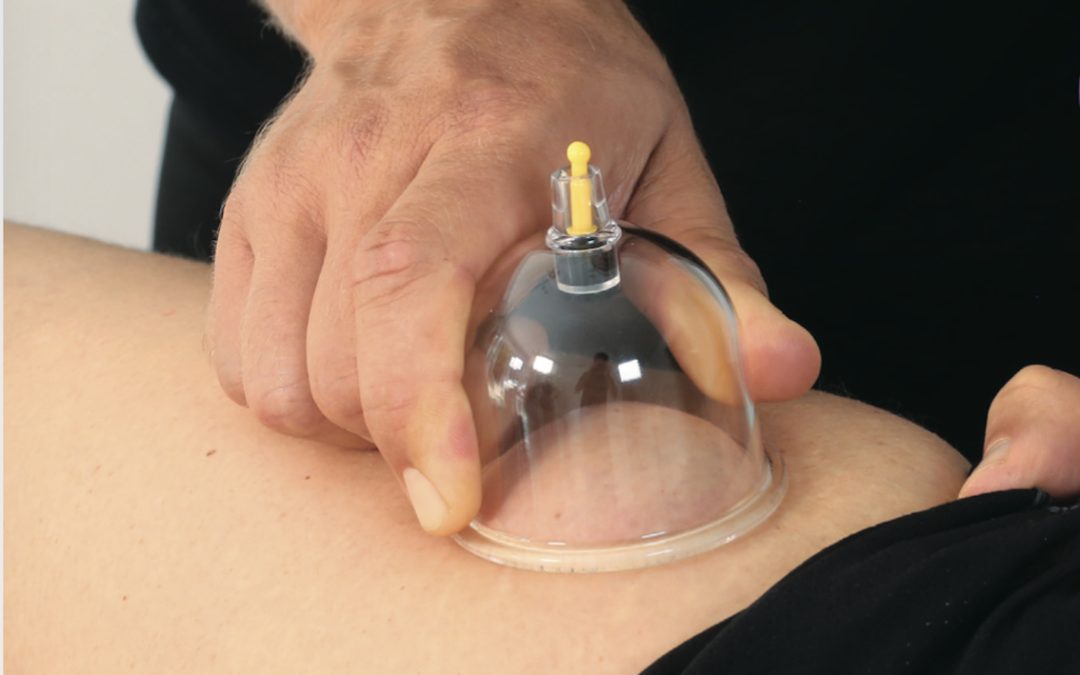
Placing a cup over the patient’s perceived painful area provides a handle for mobilising the soft tissue without applying downward pressure, which can be unduly painful in lower-back pain. If you've had cupping therapy on your lower back, you will likely appreciate why it’s become so popular. The feeling is so unique that it’s often described as “indescribable,” as it is not comparable to any other form of manual therapy.
Cupping can significantly aid lower-back-pain treatment, and much more can be achieved beyond traditional passive and static application methods. Cupping can transcend standard manual therapy and support the restoration of spinal movement and motor control. We will explore this further within this chapter.
Contraindications
While this book is beyond the scope of offering a full lumbar-spine assessment plan, this chapter does provide an opportunity to raise awareness of spinal red flags, including cauda equina syndrome (CES).
CES is a rare but serious condition that, if left untreated, can lead to permanent loss of bladder and bowel control and sexual function. It can be successfully treated if suspected and detected early. If your patient is experiencing any of the symptoms listed in box 1, instruct them to speak to a doctor or visit an emergency department on that same day. It is better to be overcautious if CES is suspected.
Box 1. Cauda Equina Syndrome Warning Signs
• Loss of feeling or pins and needles between the inner thighs or the groin
• Numbness around the genitals, buttocks, or anus
• Increased difficulty urinating, leaking, or loss of sensation
• Not knowing when your bladder is full or empty
• Loss of sensation in the genitals
If a patient reports any combination of the above, they should seek medical help immediately from a doctor or an emergency medical department.
Box 2 lists other signs of serious spinal pathology, which are therefore contraindications to treatment. Patients experiencing or reporting any of these symptoms should report them to their doctor.
Box 2. Serious Spinal Pathology Warning Signs
• History of trauma, including falls, collisions, and impacts
• Worsening pain that continues without movement and at rest
• History of cancer
• Known or suspected osteoporosis
• High temperature or feeling generally unwell
If a patient reports any of the above, they will need to be assessed by a medical professional before any treatment, including cupping, is considered.
Stages of Nonspecific Back Pain
Lower-back pain has many causes, and it remains a unique experience for each individual.
This chapter will focus on techniques for nonspecific lower-back pain—this is the most common back-pain patient category. Patients with nonspecific lower-back pain have no history of spinal trauma and no symptoms of sciatic or other peripheral nerve involvement. The techniques are most effective for acute back pain lasting less than six weeks but may also be used for more persistent lower-back pain, though longer-term back pain is often much more resistant to manual interventions.
Physiotherapist Dr C. M. Norris (2020) described the back-pain recovery and rehabilitation process as passing through three distinct phases: reactive, recovery, and resilience. I am very much in favour of his approach.
When an episode of lower-back pain initially occurs, the patient is very reactive to the pain, often limiting movement and seeking to rest and immobilise as much as possible—this type of patient behaviour is initially helpful to allow pain reduction and recovery. During this first phase, most patients well receive and appreciate passive interventions, which could include cupping. Once the patient feels the back pain has “settled,” guide them to recover and restore normal spinal movement patterns. Cups can augment the recovery phase, but not in the same way they were used during the reactive phase. This is where we see cups move from the constraints of traditional treatment to the innovative methods described later in this chapter.
The final phase, resilience, is the most exciting phase of rehabilitation. Sadly, it is one that is often ignored by bodyworkers and their patients, owing to the typically satisfactory reduction of pain and a lack of patient motivation to continue rehabilitation if no longer experiencing pain. In the resilience phase, as the name suggests, patients can build resilience to the pain and dysfunction that come from the demands of normal daily life. This is often described as creating a functional buffer zone.
As mentioned previously, treating lower-back pain with cups requires more than just vacuuming the sore spots. The following treatment options are presented in a progressive order. You may be able to take a patient through the full regime in one session, or it may take multiple sessions to progress to the more advanced techniques.
Getting Started
Using the standard application principles outlined in chapter 2, begin with the patient in a resting position. This could be seated, prone, or side-lying, depending on the patient’s mobility and preference.
Passive Cupping
The starting position should be as comfortable as possible for the patient before the cups are applied. You may wish to start with just one cup applied with a low-to-moderate level of vacuum. This will allow the patient to familiarize themselves with the sensation, ask any questions regarding cupping, and begin to relax.
Following the introduction of one cup, the treatment can then progress by adding a second cup and mobilizing the soft tissue using the cups as handles, continuing this for 1 minute and then relocating the cups to avoid excessive skin marking (ecchymosis). Active Cupping
Active cupping over the spine provides therapeutic movement in combination with the sensory stimulus of cupping. To achieve this, begin with the cups over the lower back, and then guide the patient to move through a specified range of motion. Large ranges of motion can cause the vacuum to break as skin movement breaks the seal around the cup. For this reason, make sure you are not using glass or other breakable cups.
Advanced Techniques
Active cupping techniques can be enhanced with passive soft-tissue mobilisation to increase tissue shear during an identified movement restriction. The tissue shear can be applied to either assist or resist the movement or may alternate between the two. Advanced technique examples for spinal rotation, lumbar flexion, and side flexion are shown below.
Advanced Lumbar Rotation Technique
Begin with the patient seated, with their back accessible. Assess the direction of rotation restriction—i.e., right or left. Then place two cups on or just above the glutes on the same side as the rotation restriction, at an oblique angle (figure 9.4a). The aim is to place the cups along one of the myofascial lines that run across the spine. The cups can then be gently mobilized in the opposite direction to the active rotation to create tissue resistance and a tolerable level of shear strain.
An alternative method would be to assist the soft-tissue glide by mobilising the cups in the same direction as the rotation. After three or four end-range rotations coupled with assisted or resisted soft-tissue mobilisation, the patient should experience less resistance to rotation. If needed, repeat the treatment and reapply the cups further up the myofascial line.
Advanced Lumbar Flexion Technique
Begin with the patient seated, with the feet raised to flex the hips. The patient should then bend forward into pain-free lumbar flexion. Apply two cups over the paraspinal muscles at the level of the upper lumbar spine. Apply a shearing force through the cups by resisting the forward flexion with a downward counter-tension by pulling the cups gently downward (figure 9.5b). Repeat this manoeuvre as the cups are relocated at intervals down the lumbar spine and over the upper sacroiliac-joint region (SIJ)
Advanced Lumbar Side-Flexion Technique
Begin with the patient in a neutral sitting position with approximately 90 degrees of flexion at the hips. Place one large cup over the region of the quadratus lumborum on the side you wish to stretch. Instruct the patient to reach overhead and side-flex in the opposite direction, while you apply downward counter-pressure with the cup. Repeat this manoeuvre three to four times before retesting the patient’s side flexion.
Bringing It All Together
Once a patient becomes familiar with cupping therapy and regains confidence in their spinal motion, you can deliver the methods presented in this chapter progressively during a single treatment session, with some potential customisation to suit individual patients.
Cupping for Back-Pain Rehabilitation
The sensory experience of vacuum cupping can offer more than just a pleasant sensation. The lumbar spine lacks the ability to calibrate its movement with simple visual feedback. As a result, teaching back-pain patients restorative movement patterns can be challenging. Movement performance can be enhanced with increased sensory input, and this is often achieved with careful hand placement, also known as tactile facilitation, but it can also be achieved with vacuum cups, which have the advantage of being able to cover a larger area and provide a more intense and novel sensory input when compared with the touch of a hand.
For example, if you are teaching a patient to flex the lumbar spine, they may struggle to feel whether the spine is indeed flexing. However, with strategically placed cups (figure 9.8), intense stretching under the cups will be felt during lumbar flexion, providing feedback and a sensory reference to perform the flexion action correctly and learn a new movement pattern.
Conclusion
The many ways cupping can be incorporated into lower-back pain management highlight how versatile this treatment modality can be. You may wish to follow the guidance set out in this chapter or use the concepts to improve your current approaches to back pain. Whichever route you choose, this chapter presents a modern methodology that lets practitioners move beyond the limitations of traditional cupping and integrate modern, evidence-based approaches to back pain.
About Daniel Lawrence
Daniel Lawrence is a UK Chartered Physiotherapist, Multi-Published Author, YouTube Creator – @ThePhysioChannel – and International lecturer. Daniel holds separate post-graduate qualifications in Muscluloskeletal Medicine and Education. After 10 years as a University Lecturer, Daniel now combines teaching, creating, travelling, and clinical work alongside his role as European Education Director for RockTape.
References
Myers, T. W. 2013. Anatomy Trains E-Book: Myofascial Meridians for Manual and Movement Therapists. Elsevier Health Sciences.
Norris, C. M. 2020. “Back rehabilitation: The 3R’s approach.” Journal of Bodywork and Movement Therapies 24(1): 289–99.